How I Managed My Precious 180 Seconds at the UNESCO-OWSD Short Talk, Big Impact Competition and the Impact It Made
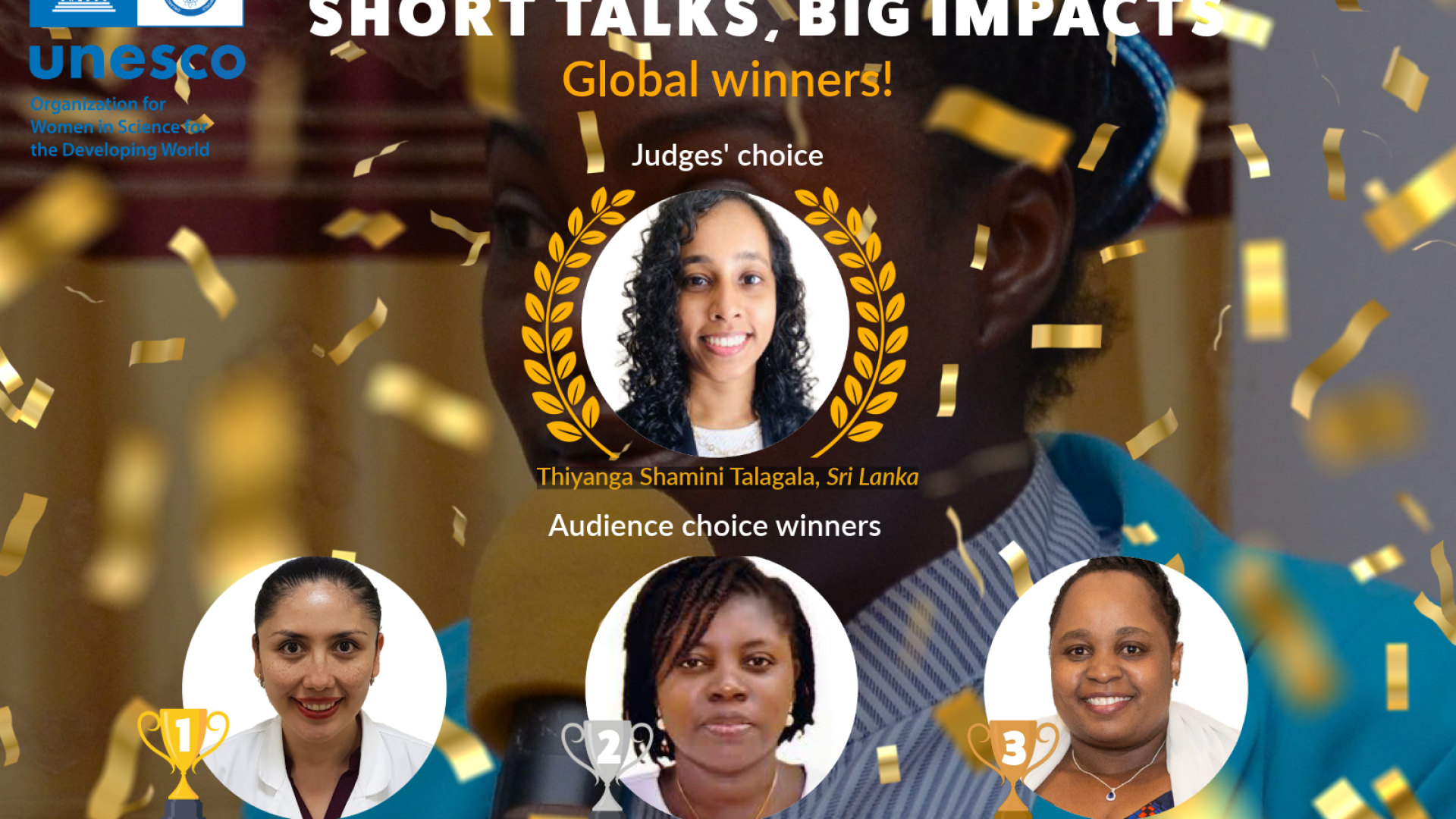
When I first heard about the OWSD “Short Talk, Big Impact” competition, I knew it was not going to be just another presentation. I had only 180 seconds to communicate years of research, spark curiosity, and leave a lasting impression.
My talk was titled “Exploring Artistic Legacy: Analyzing Artifact Differences Across Kingdoms Using Machine Learning.” It reflected my dual identity as both a data scientist and an artist, and my passion for discovering the mathematical beauty hidden within our cultural artifacts.
Before the Event
OWSD made the process incredibly organized. The OWSD team guided us with great care. We received detailed information about the event, the judging criteria, and even examples of successful short talks to learn from. These resources helped me understand what makes a talk memorable in such a short span of time. The organizers also walked us through how the competition would unfold; from the time limits to the technical arrangements. That helped calm my nerves a bit, because I knew what to expect.
Planning My Talk
My research topic is quite complex, and simplifying it into something engaging was a challenge in itself. I didn’t want to oversimplify the science, but I also didn’t want to lose the audience in technical jargon. So, I planned my talk using a simple but powerful technique: I started with something familiar (a concept that anyone could relate to) and gradually led the audience into the heart of my work.
Strategy 1
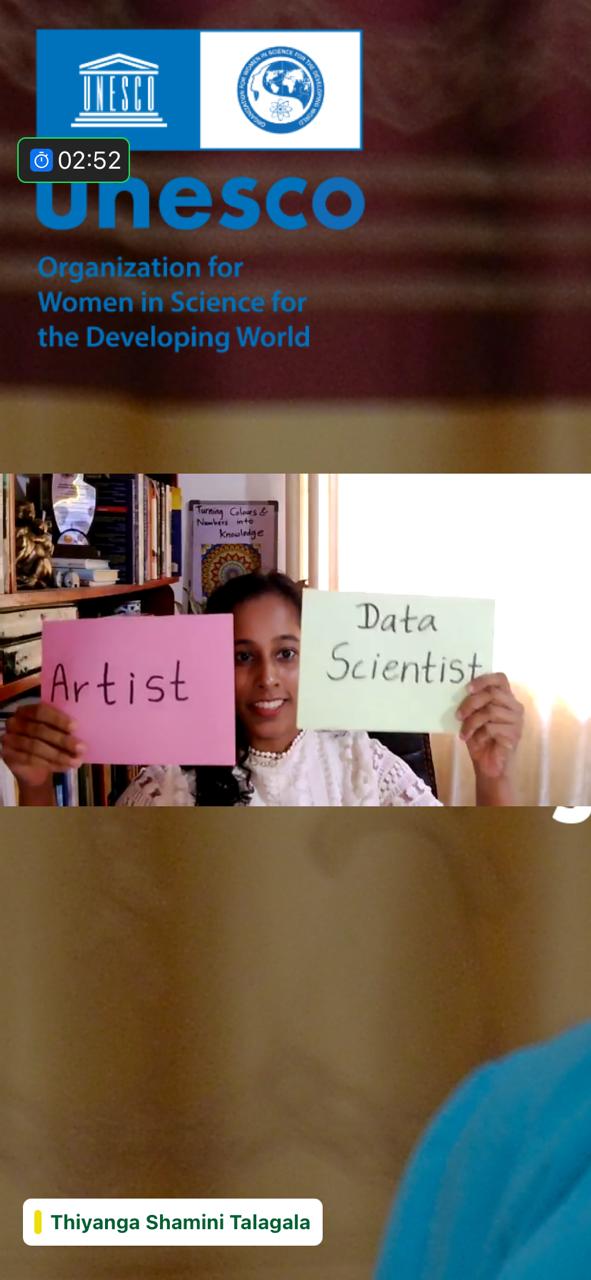
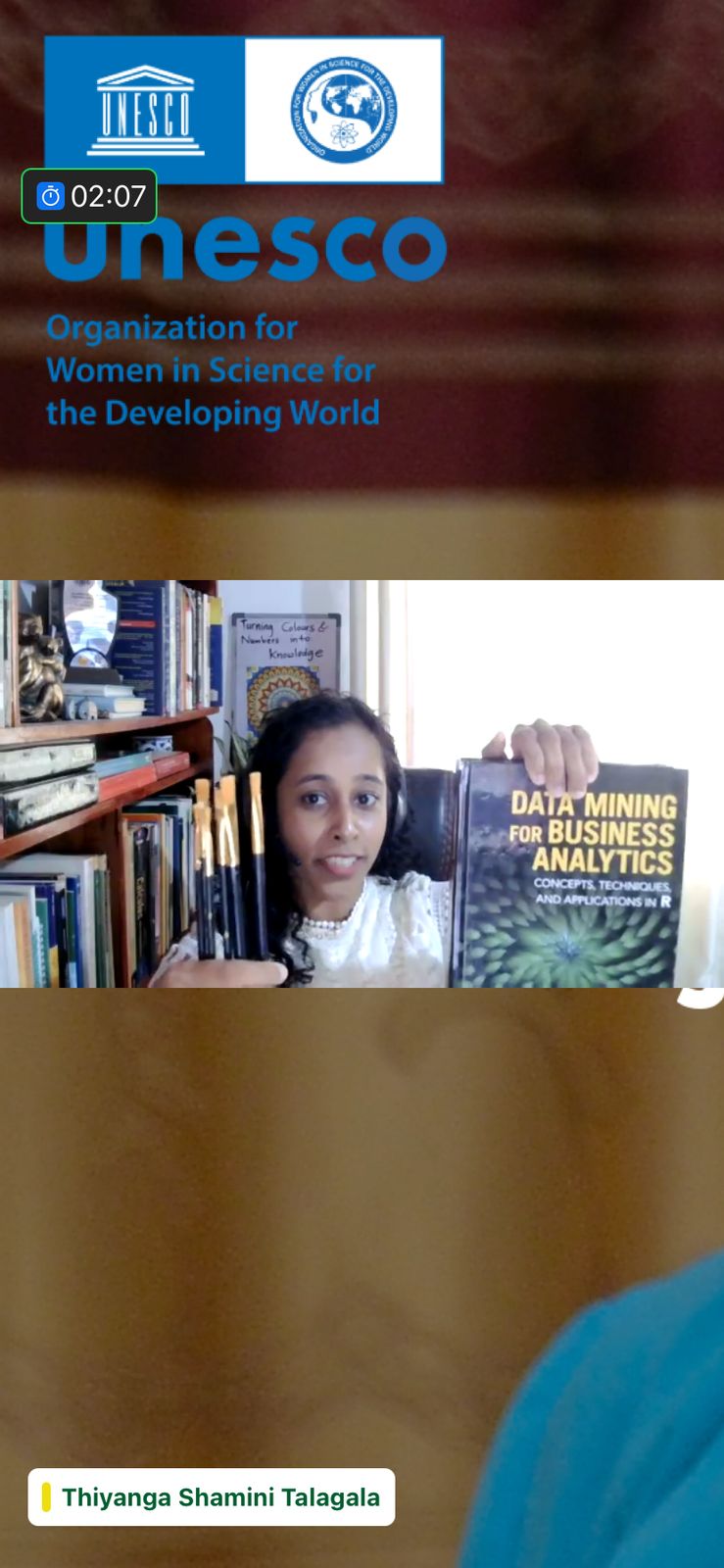
I began with something familiar, the worlds of art and data science, and drew parallels between the two.
“Artists see patterns in shapes. Data scientists see patterns in data. They both tell stories about the world.”
From there, I gently led the audience toward the unknown — the idea that machine learning can uncover mathematical concepts embedded in historical artifacts. This transition helped the audience travel with me, step by step, from everyday understanding to a new and thought-provoking perspective.
Strategy 2
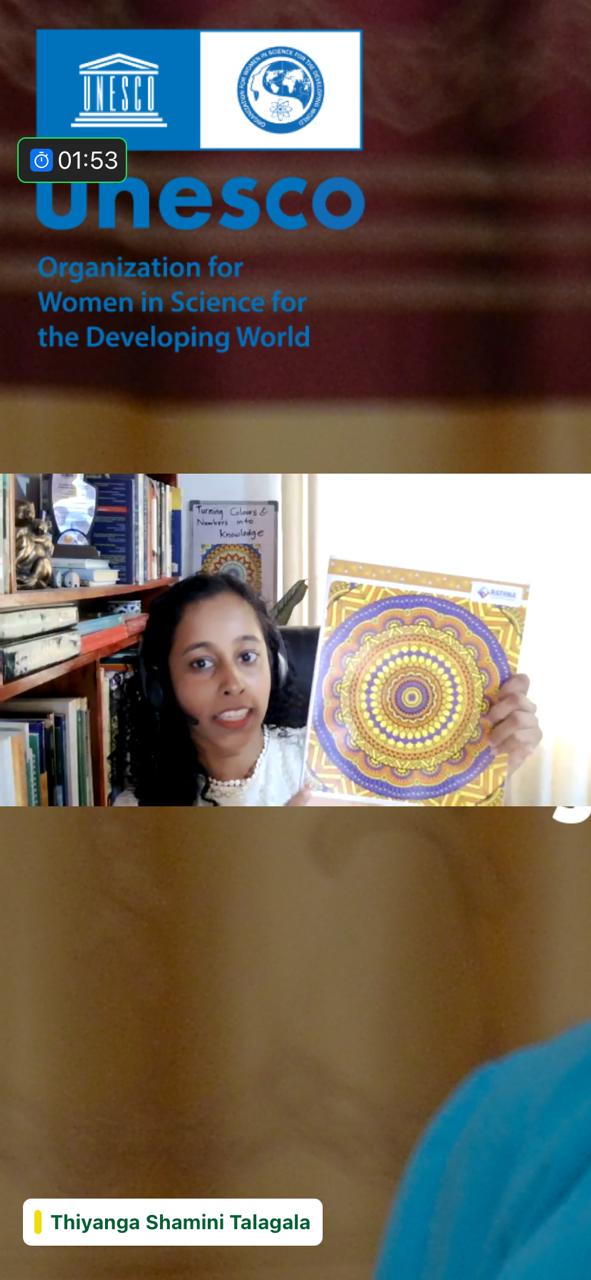
I also used visuals strategically. A well-designed image can say what fifty words cannot. Each visual was chosen carefully to support my message, not distract from it. For example, I used visuals of ancient murals and artifacts to illustrate how geometry, tessellation, and symmetry reveal the deep mathematical roots of our artistic heritage.
Strategy 3
The environment was another thing I paid close attention to. The day of my talk coincided with World Mathematics Day, and this year’s theme was “Mathematics, Art, and Creativity.” It aligned perfectly with my topic, and I used that to my advantage by showing. It helped create a meaningful connection with the occasion and made my talk feel timely and relevant.
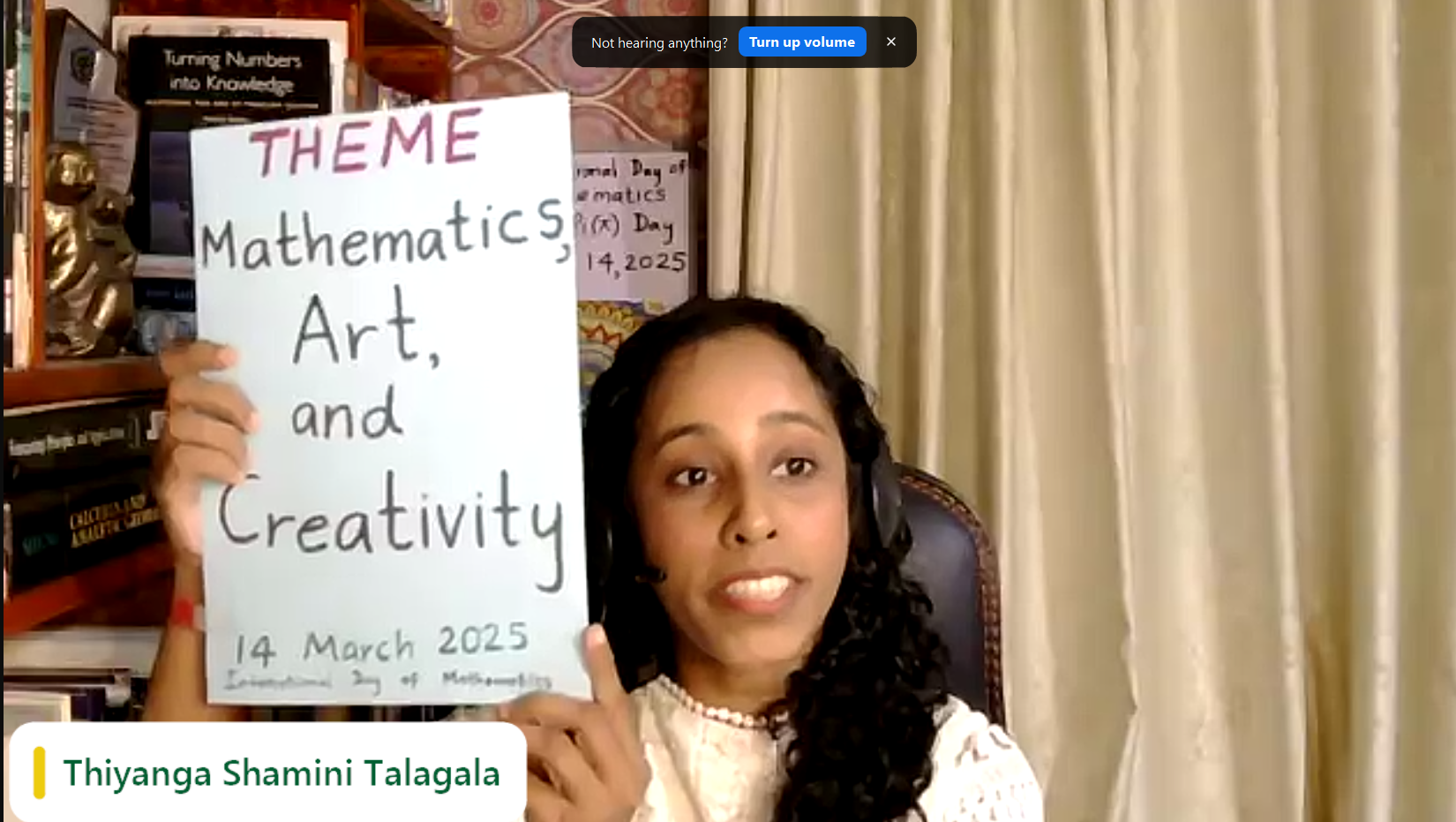
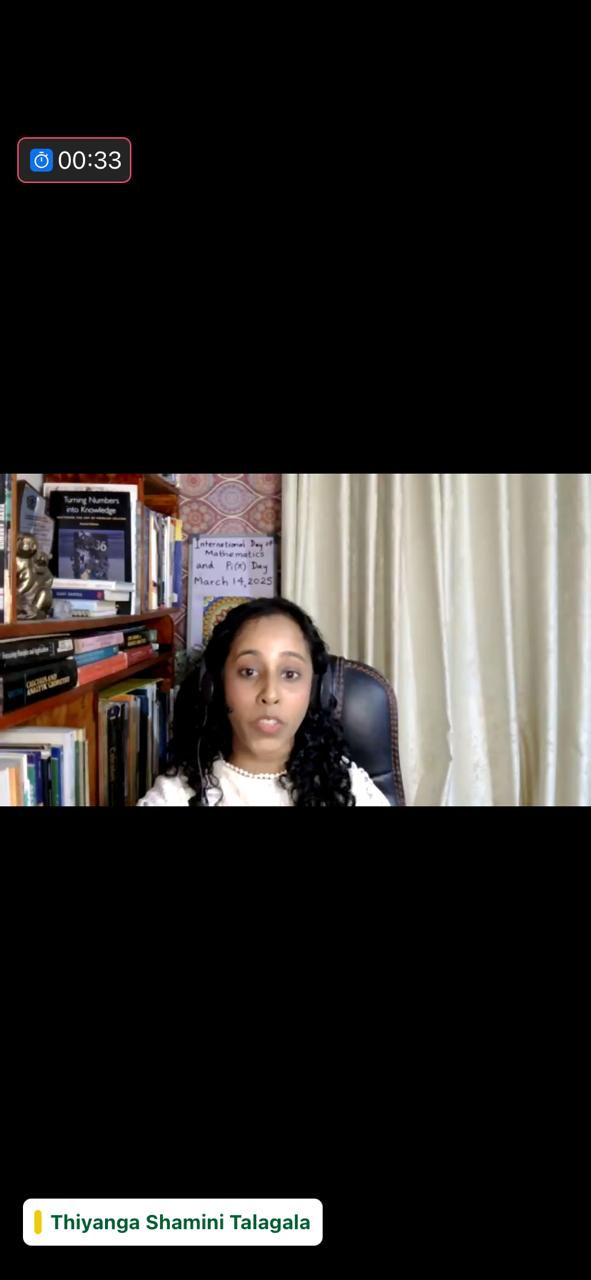
Furthermore, I also set up my background to match the theme of my talk. I arranged my room with artistic elements that reflected both mathematics and creativity, creating an environment that visually supported my message and helped the audience feel the connection between art, science, and culture.
Strategy 4
And one thing I never did: memorize by heart. I’ve learned that when you memorize, you lose the natural rhythm of speaking. Instead, I practiced enough to know my key points and let the rest flow naturally. That way, my words sounded genuine and spontaneous, not rehearsed.
What I Learned
This experience taught me that clarity is more powerful than complexity. If your audience can understand and remember one key message, you’ve succeeded. It also reminded me of the importance of storytelling in science.
I also realized that the impact of a short talk doesn’t end when the timer stops. The feedback I received afterward from people who said my talk helped them see my research differently was truly rewarding.
The Impact
The response to my talk was heartwarming. Many told me they had never thought of mathematics and art as connected before. Some said the talk made them curious about the patterns hidden in culture and that curiosity, I believe, is the true success of any scientific communication.
The lessons I learned from the competition have become an integral part of my teaching. I now incorporate them into my Scientific Writing and Communication and Essential Skills in Statistics course units when teaching undergraduate and postgraduate students in the fields of Statistics, Data Science, and Artificial Intelligence. I have also been invited by several organizations to conduct training sessions on effective scientific communication and data storytelling.
Furthermore, this experience has also given me a platform to give a voice to our proud artifacts and historical paintings in Sri Lanka, highlighting the mathematical concepts rooted within them and how technology can help preserve and celebrate this heritage on a global stage.
Participating in the OWSD competition gave me more than just a platform. I learned how to distill my ideas, how to communicate science with heart, and how to make every second count.
Thank you
A huge thank you to Erin Johnson and Giulia Signori of the OWSD Secretariat. They highlighted the positive aspects of each talk and appreciated the valuable messages shared with the audience. The way they organized the event was also an excellent learning experience for us, providing insights into effective event planning and audience engagement.
A big shout-out to UNESCO-OWSD and The World Academy of Sciences (TWAS) for providing this valuable opportunity by organizing such an impactful event.
My 180 seconds might have been short, but the impact it created will stay with me for a long time.